In our fast-paced, high-pressure world, feelings of exhaustion, stress, and emotional strain are increasingly common. But when these feelings persist, it can be challenging to know whether you’re dealing with burnout vs. depression. While they share overlapping symptoms, they are distinct conditions that require different approaches to treatment and support. Understanding the difference between burnout and depression is the first step toward recovery and well-being.
At Hope Clinic & Wellness, we believe that education and awareness are essential for mental health. In this article, we’ll explain the key differences between burnout and depression, how to recognize the warning signs, and how to get the right help to reclaim balance in your life.
- “Hope Clinic & Wellness” → https://hopeclinicandwellness.com
- “mental health” → https://www.nimh.nih.gov/health/topics/index.shtml
Table Of Content
1. What Is Burnout?
Burnout is a state of physical, emotional, and mental exhaustion caused by prolonged stress. It often develops gradually and is most commonly linked to work, caregiving responsibilities, or other chronic stressors. Burnout can affect anyone, but it tends to impact individuals in high-demand environments or those who consistently put others’ needs before their own.
Key symptoms of burnout include:
- Feeling constantly drained, even after resting.
- Difficulty concentrating or completing tasks.
- Increased irritability or detachment from work and relationships.
- Trouble sleeping, frequent headaches, or muscle tension.
- Loss of motivation to engage in previously enjoyable activities.
The crucial distinction in burnout vs. depression is that burnout is often triggered by external factors, such as workload, stress, or overcommitment. With proper rest, lifestyle adjustments, and stress-management strategies, burnout is generally reversible. According to the World Health Organization, burnout is specifically considered a workplace-related syndrome, highlighting the importance of reducing chronic stress to prevent long-term health consequences.
- “World Health Organization” → https://www.who.int/mental_health/evidence/burn-out/en/
- “Burnout” →https://hopeclinicandwellness.com/

2. What Is Depression?
Depression is a clinical mental health condition that goes beyond typical stress or fatigue. Unlike burnout, depression can arise without a clear external trigger and may be influenced by biological, psychological, or environmental factors. Depression affects mood, cognition, behavior, and overall functioning, often requiring professional intervention.
Common signs of depression include:
- Persistent sadness or emptiness lasting for two weeks or more
- Loss of interest or pleasure in activities once enjoyed (anhedonia)
- Significant changes in appetite or weight
- Sleep disturbances such as insomnia or oversleeping
- Feelings of hopelessness, guilt, or worthlessness
- Difficulty concentrating, making decisions, or completing tasks
- In severe cases, thoughts of self-harm or suicide
Understanding burnout vs. depression is essential because depression requires a more structured treatment plan, which may include therapy, medication, or a combination of both. Unlike burnout, rest and lifestyle changes alone are often insufficient to alleviate depression symptoms. For more information, visit the CDC’s mental health resources.
- “CDC’s mental health resources” → https://www.cdc.gov/mentalhealth/learn/index.htm

3. Burnout vs. Depression: The Key Differences
While burnout and depression share similarities—such as fatigue, reduced motivation, and emotional distress—they are not identical. Recognizing the differences can help you choose the right strategies and seek appropriate support.
Aspect | Burnout | Depression |
Primary Cause | Chronic external stress (work, caregiving) | Can occur with or without external stress |
Emotional Impact | Frustration, irritability, detachment | Persistent sadness, hopelessness |
Motivation Levels | Interest remains but energy is low | Loss of interest in almost everything |
Recovery Approach | Improves with rest, stress relief, lifestyle changes | Requires therapy, medication, or both |
Risk if Untreated | May develop into depression | Can worsen, impacting daily life and functioning |
The distinction between burnout vs. depression symptoms is critical for early intervention. Burnout typically improves with rest and balance, while depression often persists despite lifestyle changes. Identifying which condition you are experiencing can help you seek the correct treatment before the situation worsens.
- “Early intervention” → https://www.apa.org/topics/therapy
4. Can Burnout Lead to Depression?
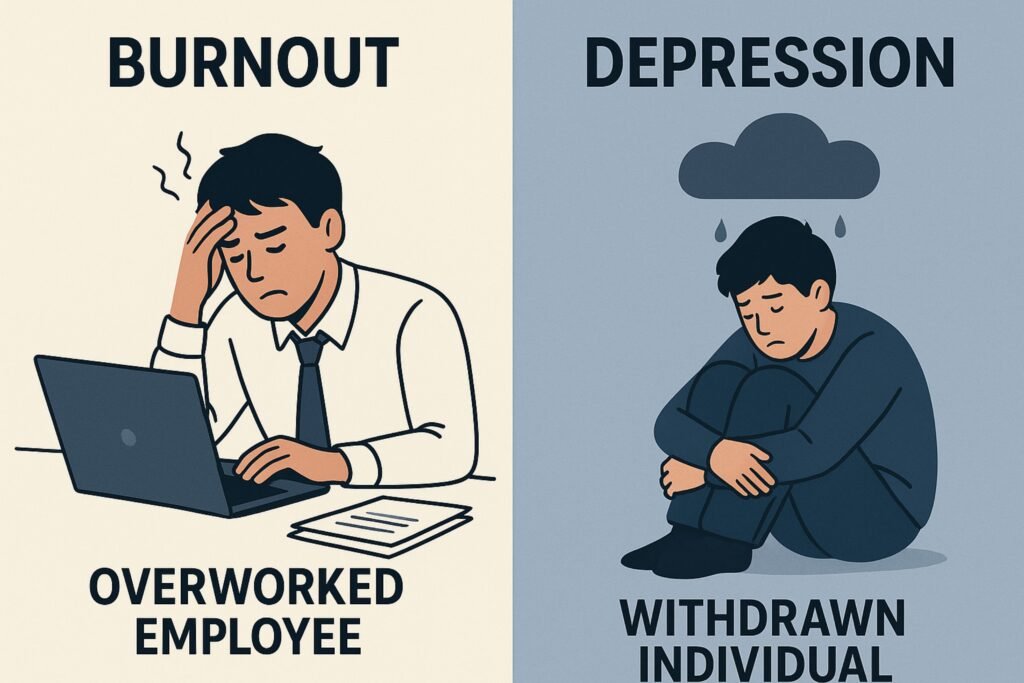
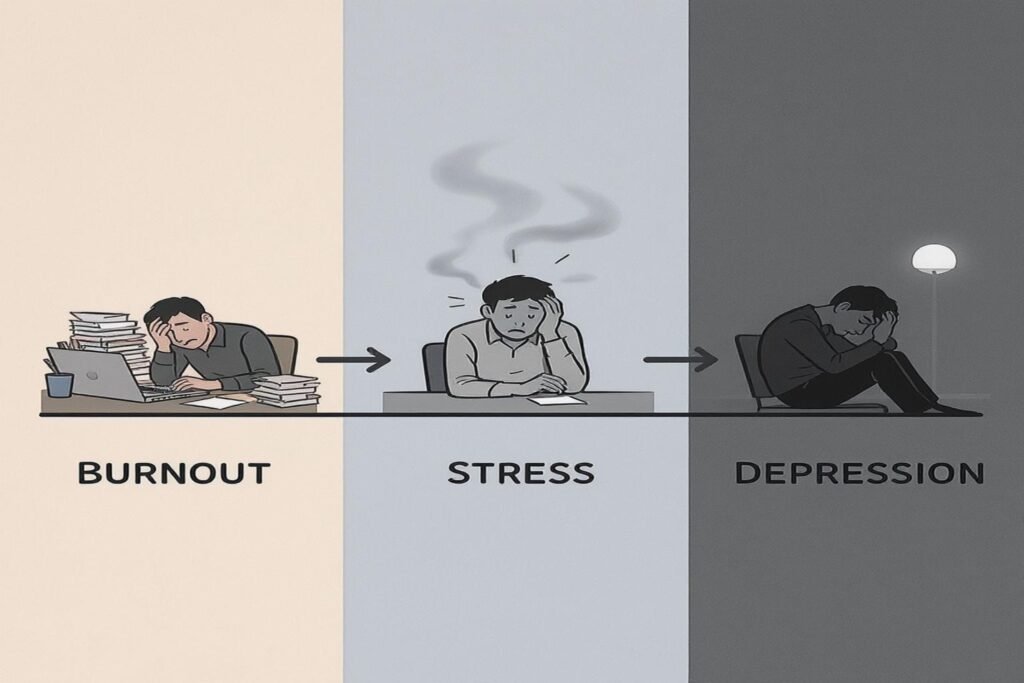
Yes. If burnout persists without proper management, it can develop into depression. Chronic stress can affect brain chemistry, mood regulation, and overall mental health. Over time, someone experiencing burnout may begin to feel hopeless, lose interest in most activities, and develop the persistent sadness that characterizes depression.
Research indicates a significant correlation between burnout and depression, emphasizing that unaddressed burnout is a major risk factor for developing clinical depression. This is why it is essential to recognize the difference between burnout vs. depression and act promptly to address symptoms.
- “Research indicates a significant correlation” → https://pubmed.ncbi.nlm.nih.gov/30918490/
5. When to Seek Professional Help
Knowing when to seek help is crucial. You should consider contacting a mental health professional if you notice:
- Symptoms lasting longer than two weeks
- Inability to function in daily life, work, or relationships
- Persistent fatigue or loss of motivation despite rest
- Constant feelings of hopelessness, guilt, or worthlessness
- Thoughts of self-harm or suicide
If you are unsure whether your experience aligns more closely with burnout or depression, a professional assessment can provide clarity and guide you toward effective treatment. At Hope Clinic & Wellness, we offer both in-person and telehealth services to help individuals address mental health challenges and regain control over their lives.
- “Hope Clinic & Wellness” → Hope Clinic & Wellness Contact.
- “professional assessment” → https://www.nimh.nih.gov/health/find-help

6. How to Recover: Treatment and Coping Strategies
Treating Burnout
- Set clear boundaries to protect your personal and professional time.
- Schedule regular breaks and downtime to restore energy.
- Practice mindfulness, meditation, or relaxation techniques.
- Prioritize nutrition, physical activity, and sufficient sleep.
- Seek counseling or coaching for stress management and coping strategies.
Treating Depression
- Engage in therapy, such as cognitive-behavioral therapy (CBT) or talk therapy.
- Take prescribed medication if recommended by a licensed provider.
- Maintain social connections and participate in supportive community activities.
- Incorporate healthy lifestyle practices, including exercise, diet, and mindfulness.
- Commit to ongoing professional follow-up and care.
Understanding the difference between burnout vs. depression is important for implementing the correct coping strategies and seeking effective treatment. While burnout may improve with lifestyle adjustments, depression usually requires structured mental health care. The American Psychological Association highlights the benefits of therapy in improving outcomes for individuals experiencing depression and burnout alike.
7. Hope and Healing at Hope Clinic & Wellness
Whether you’re experiencing burnout, depression, or a combination of both, you don’t have to face it alone. At Hope Clinic & Wellness, we provide compassionate, culturally inclusive, and holistic care tailored to your unique needs.
Through a combination of in-person and telehealth services, we help individuals regain balance, improve mental health, and achieve sustainable wellness. Recognizing the difference between burnout vs. depression is the first step toward recovery, and our team is here to guide you every step of the way.
Image Prompt: A smiling clinician greeting a patient warmly in a bright, welcoming clinic environment.
“telehealth services” → hopeclinicandwellness.com
Final Thoughts
Understanding burnout vs. depression is essential for mental health and well-being. Burnout typically stems from chronic stress and can be improved with lifestyle adjustments and stress management, whereas depression is a clinical condition that often requires professional intervention. Early recognition, proper care, and support can prevent burnout from developing into depression and promote lasting mental health.
If you’re unsure whether you are experiencing burnout or depression, don’t wait—reach out to a qualified professional. At Hope Clinic & Wellness, we are dedicated to helping you navigate your mental health journey with compassion, expertise, and holistic care.
FAQs
What is the main difference between burnout and depression?
Burnout is usually caused by chronic external stress (like workload or caregiving), while depression is a clinical mental health condition that can occur with or without external triggers. Burnout often improves with rest and lifestyle changes, but depression usually requires professional treatment.
Can burnout turn into depression?
Yes. If left untreated, burnout can progress into depression. Long-term stress affects brain chemistry and emotional regulation, which may increase the risk of developing depression.
How do I know if I have burnout or depression?
If your symptoms improve with rest, breaks, and lifestyle adjustments, it’s more likely burnout. If feelings of sadness, emptiness, or hopelessness persist despite rest and last for more than two weeks, you may be experiencing depression and should seek professional help.
Is professional help necessary for burnout?
Not always. Burnout often improves with rest, boundaries, stress management, and self-care strategies. However, if burnout symptoms are severe or persistent, professional counseling or therapy can be very beneficial.
What are the best treatments for depression?
Effective treatments for depression include therapy (such as cognitive-behavioral therapy), prescribed medications, lifestyle changes, and ongoing support from a mental health professional.
How long does it take to recover from burnout vs. depression?
Burnout recovery may take weeks to months depending on stress levels and lifestyle changes. Depression recovery varies and often requires longer-term treatment and follow-up with a mental health provider.
When should I seek professional help?
If your symptoms last more than two weeks, interfere with daily life, or include hopelessness or thoughts of self-harm, it’s important to seek professional help immediately.
Where can I find support?
You can find resources through Hope Clinic & Wellness, the National Institute of Mental Health, or the American Psychological Association.